
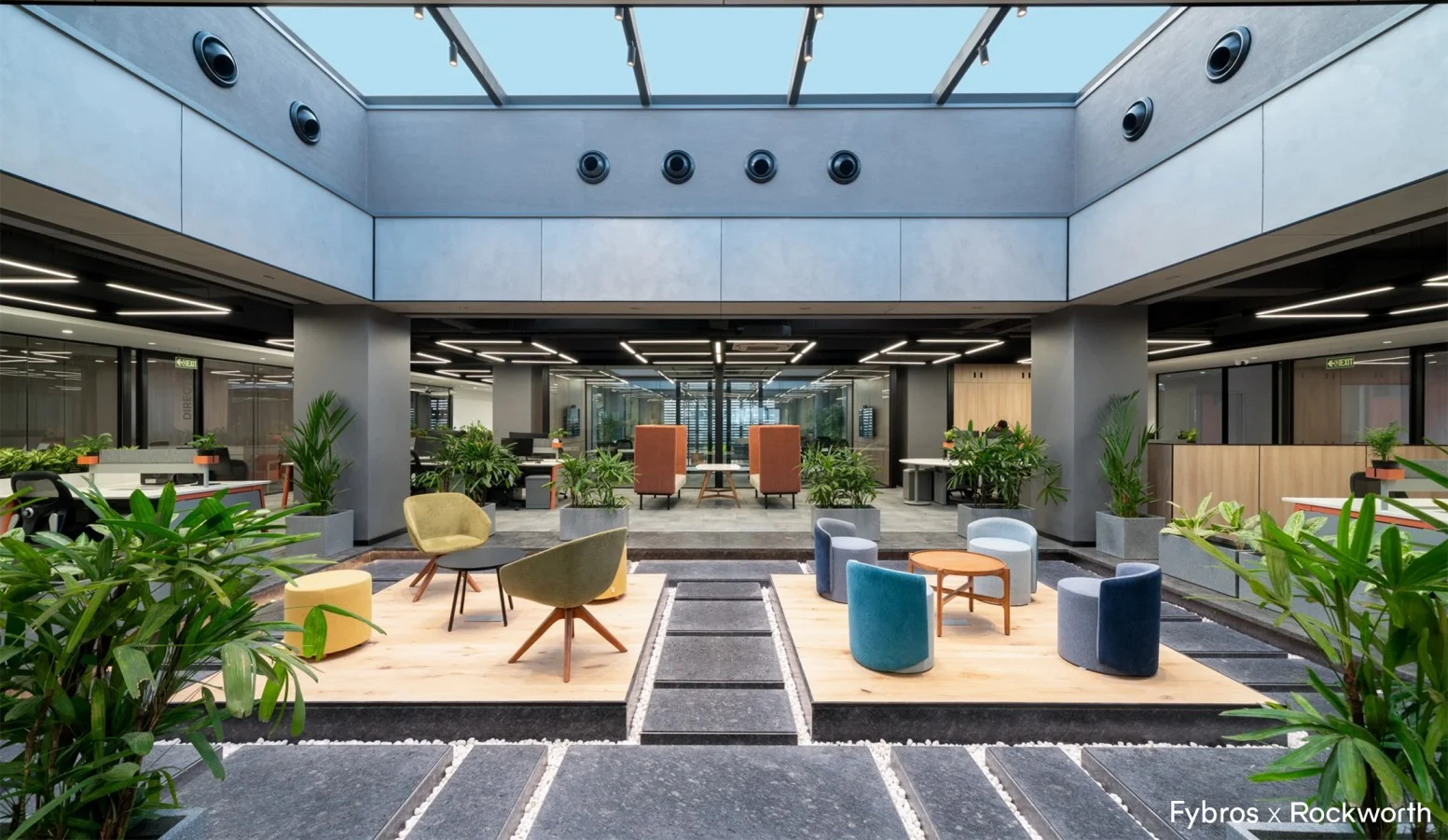
The latest office design trends focus on human-centric, flexible, sustainable and technology-integrated spaces. Redesigning workspaces to meet the growing culture of Hybrid work & optimizing space usage make offices more than traditional desk-heavy layouts. Offices have evolved to become experience centres offering complete solutions for wellbeing and productivity. It is a win-win solution for both the employer and the employee.
Top Office Interior Design Trends for 2026
Top office interior Design Trends can be divided into the following 7 categories
- Human-centric & experience-driven workspaces
- Hybrid work & activity-based zoning
- Flexible and modular furniture systems
- Smart offices & technology integration
- Sustainability & circular design
- Biophilic & multi-sensory design
- Performance-focused furniture (ergonomics, acoustics, cognition)
These trends are shaping how companies design offices that attract talent, improve productivity, and adapt to changing work patterns
Key change drivers for office design in 2026
Modern workplaces are no longer limited to work. They have evolved based on the prioritization of
- Employee comfort and wellbeing
- Hybrid workspaces
- Optimum Space Utilization
- Technology-integration
- Work culture and experience
- Sustainability goals such as LEED certification
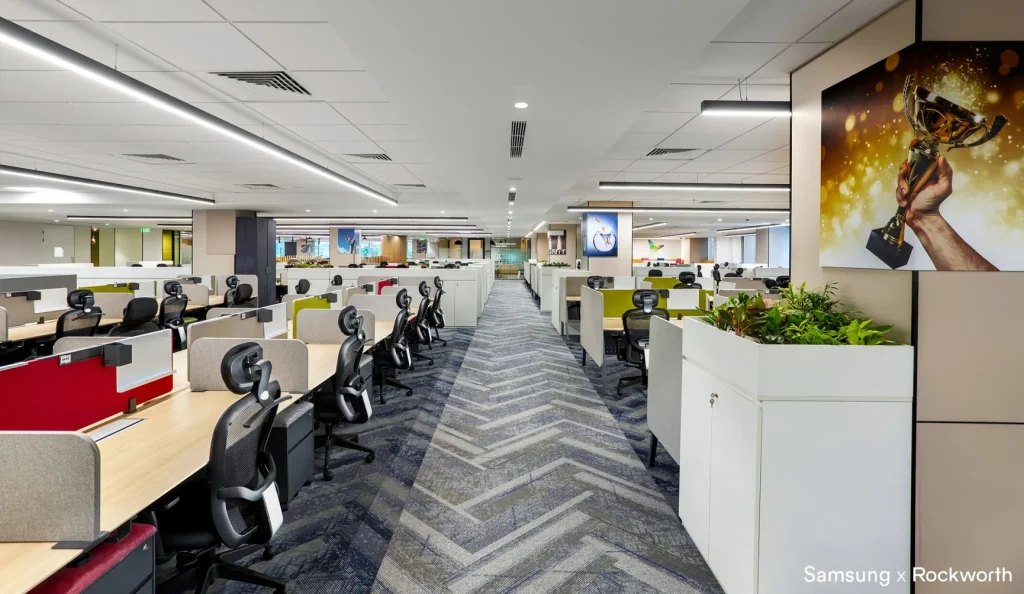
1. Human-Centric & Experience-Driven Workspaces
Offices are being designed around “people”, not processes. Motivation is a key factor considered for employee productivity. Hence, the need for workspaces where employees feel motivated, comfortable and connected becomes indispensable.
Key Features
- Focus on employee and work culture
- Collaborative bridge meeting spaces
- Pastel and Pantone-inspired colour palettes
- Spaces that support both focused work and team interactions
Why It Matters?
Companies are faced with an important reality– The biggest motivator for employees is not just individual work but also collaboration, culture and experience.
2. Hybrid Work & Activity-Based Working (ABW)
According to ACCA’s (Association of Chartered Certified Accountants) latest report (2026), Hybrid work remains the clear preference both globally and in India. 75% of respondents globally and 79% in India prefer Hybrid work over fully remote or fully office-based models.
Hybrid work has become a permanent reality for many organizations. Instead of assigning one fixed seat for an employee, there is a shift towards Activity- Based Zoning.
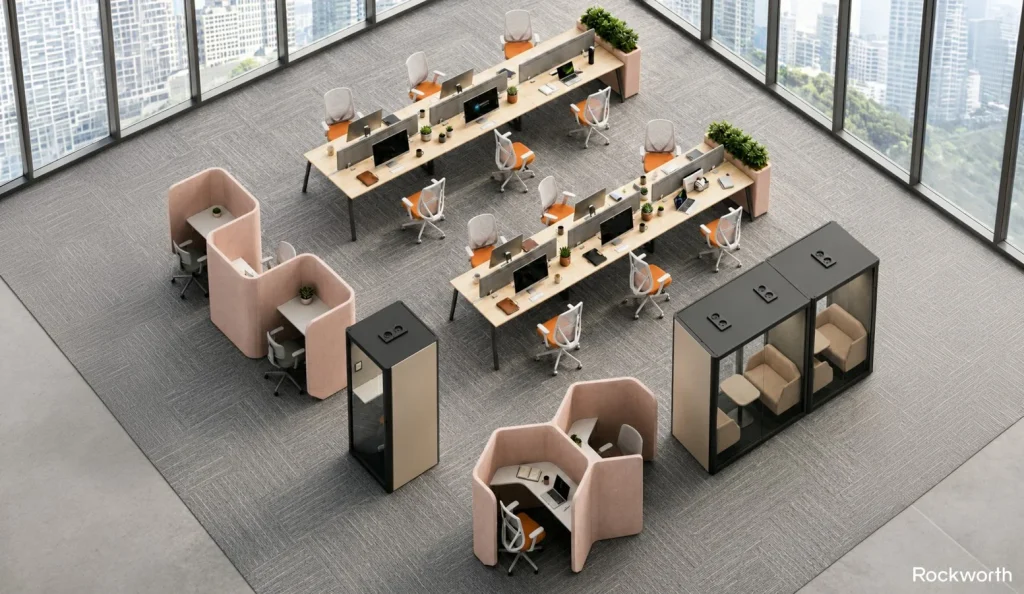
Key Features of ABW
Different zones are designed for different tasks
- Pod workstations for collaboration and team meetings
- Phone booths for private calls
- Media Booths for focus and deep work
Why It Matters
Activity-Based Working (ABW) helps organizations make better use of office space while supporting the needs of hybrid teams. By reducing unused desk space and creating dedicated zones for different activities, businesses can improve collaboration, productivity, and employee experience. Industry observations suggest that modern workplaces are becoming increasingly flexible and experience-driven, with the focus shifting from office size to how effectively the space supports people and work.
3. Flexible & Modular Furniture Systems
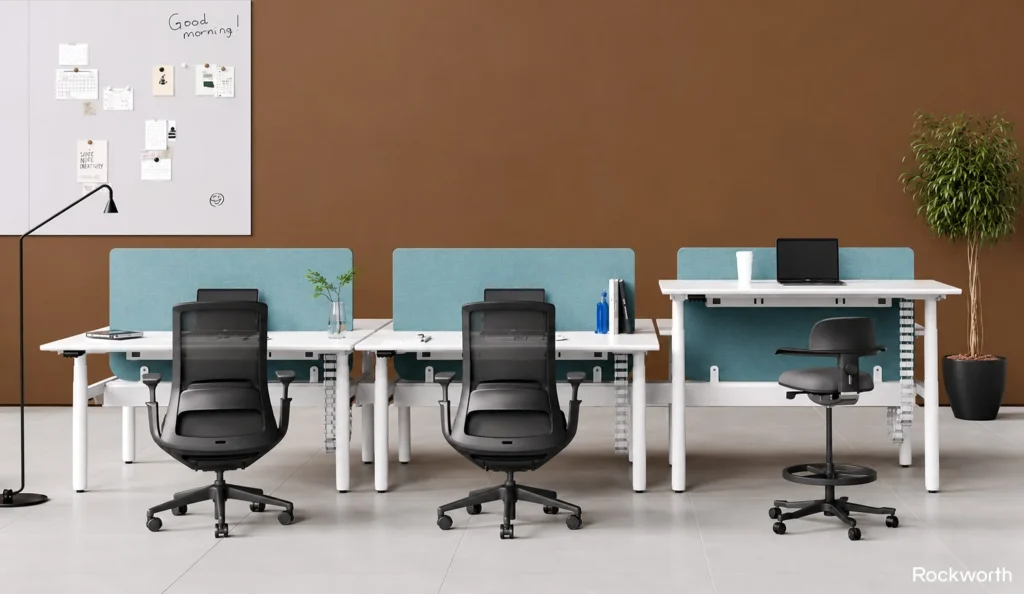
Flexibility is becoming one of the most important considerations in office designs. Today organizations require furniture solutions that can adapt to changing team sizes, workplace layouts and business needs without requiring expensive redesigns.
Experts at Rockworth report that clients are increasingly seeking solutions that are adaptable—that align with their space requirements and cater to layout constraints. Instead of static furniture configurations, clients look for expandable, reconfigurable furniture that can be relocated with ease.
Large enterprises, particularly in the IT sector, are also showing increased interest in flexible desking systems that support collaborative work environments and Hybrid workplace models.
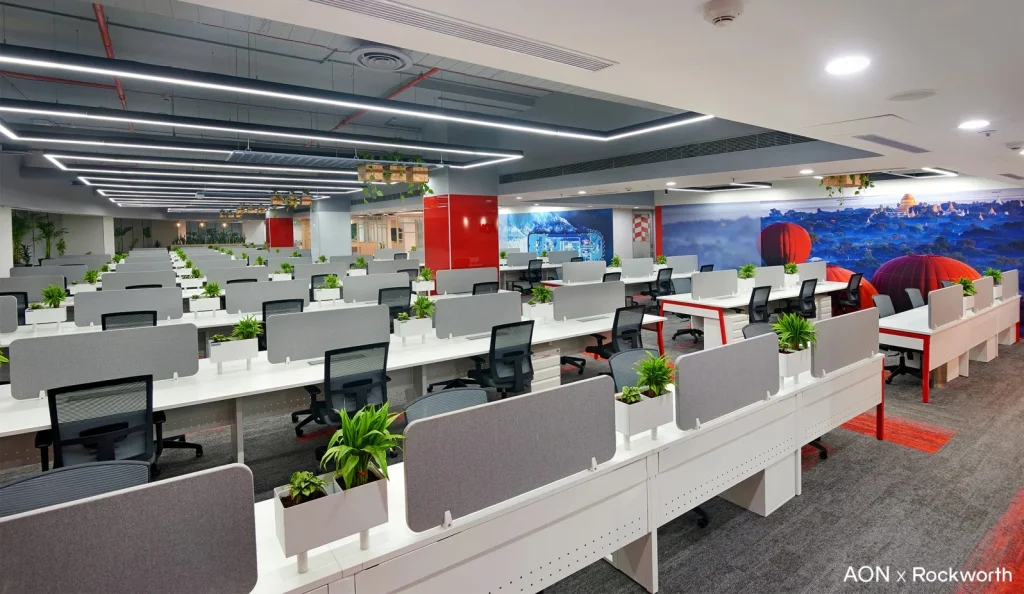
Key Features
- Modular workstation systems
- Reconfigurable meeting spaces
- Flexible seating arrangements
- Multi-purpose furniture solutions
- Adaptable storage systems
Why It Matters
To maximize space and future proof their workplace investments, the ability to modify office layout without significant disruption is helpful and efficient.
4. Smart Offices and Tech Integration
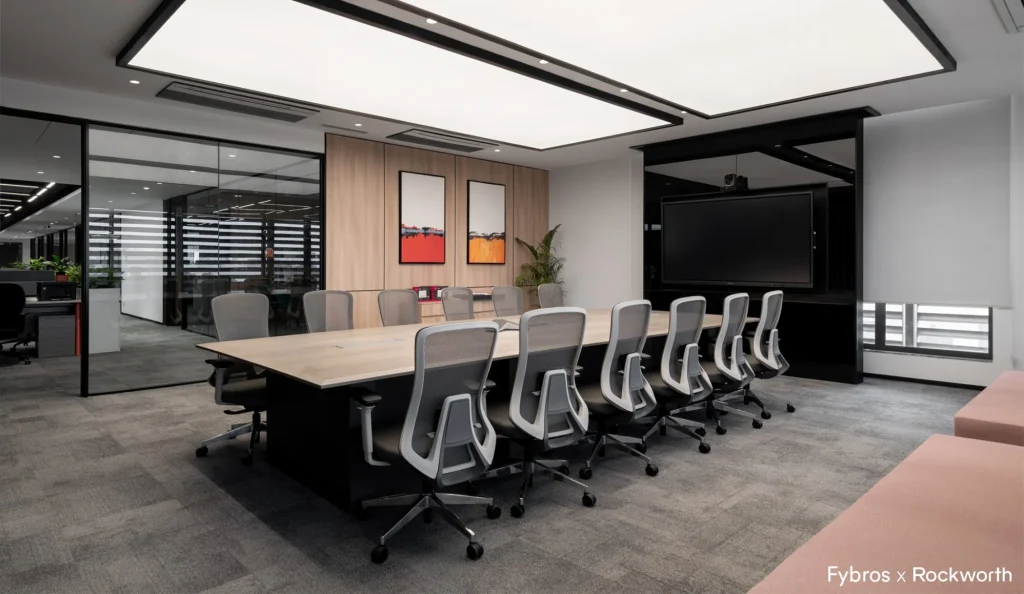
Smart offices are being designed to create experiences that go beyond operational efficiency. They also focus on comfort that can be achieved by technical efficiency. However, the real shift is not simply about adding more technology. Rather, technology is increasingly being viewed as an extension of workplace ergonomics and employee comfort.
Key Features
- Smart meeting room scheduling
- Wireless collaboration technology
- Occupancy monitoring systems
- Intelligent lighting and climate control
- Integrated video conferencing infrastructure
Why It Matters?
As organizations continue to embrace flexible work arrangements, smart office capabilities are expected to become a standard workplace requirement.
5. Sustainability & Circular Design
Sustainability is no longer an aspiration but a requirement and a core business priority.
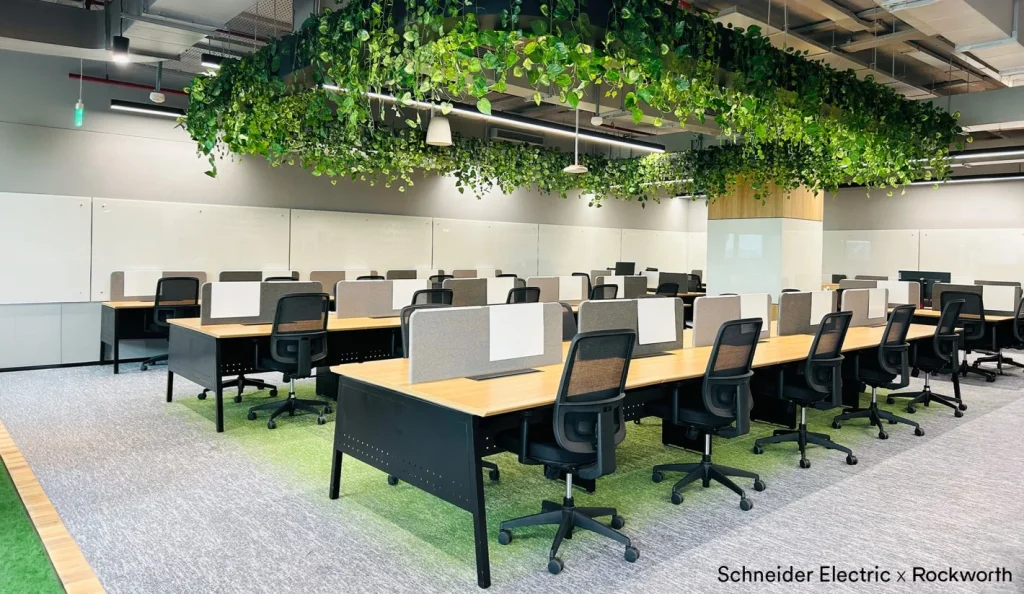
One of the strongest indicators of this shift is the growing demand for sustainable building certifications such as LEED. Businesses are actively looking for office interiors that support environmental performance through responsible material selection, energy-efficient systems, and long-lasting furniture solutions. Companies that provide comprehensive warranties, use environmentally friendly materials that enhance product life cycle are preferred by clients.
Key Features
- LEED-oriented workplace planning
- Sustainable materials
- Energy efficient lighting systems
- Long-life furniture solutions
Why It Matters?
Sustainable workplaces provide benefits that go beyond environmental responsibility.
They support employee wellbeing and brand perception by supporting the company’s CSR activities at large. Brands look at the long-term value that sustainability commitments provide rather than short term monetary losses that they may have to face.
6. Biophilic & Multi-Sensory Design
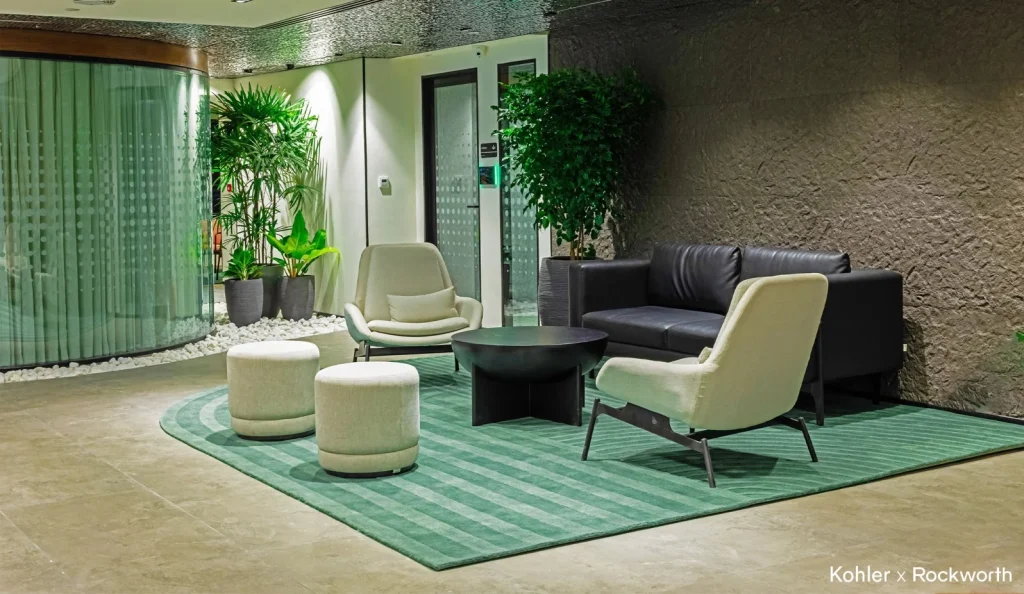
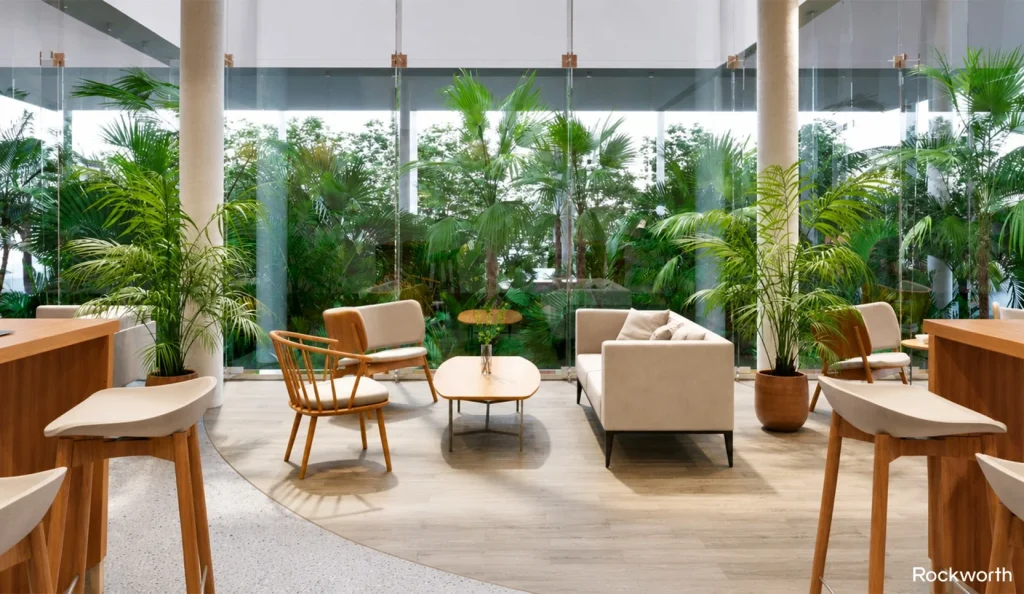
Organizations are embracing biophilic designs that strengthen connection between people and nature.
ResearchGate shows that workspaces integrating nature can increase employee creativity by up to 15% and attention/working memory by 14%.
Industry experts identify biophilic design as one of the fastest growing design trends among organizations pursuing sustainability and employee wellness initiatives.
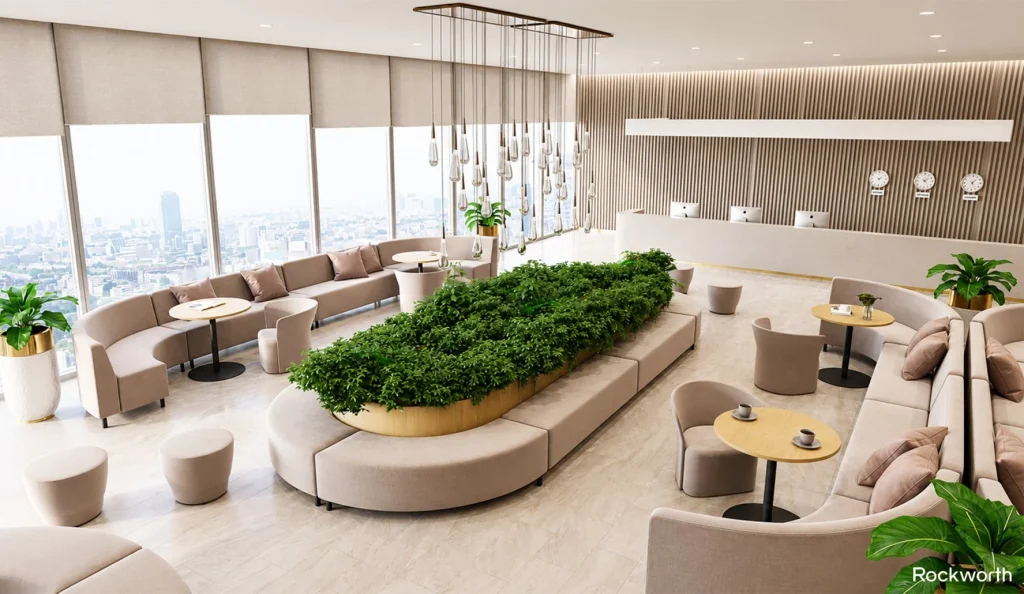
Companies are integrating natural elements into overall workplace experience. This includes indoor plants, natural materials, daylight optimization and organic textures. This design helps create a healthier and more engaging work environment.
Key Features
- Indoor plants
- Natural light optimization
- Nature-inspired colour palettes
- Organic textures and materials
- Improved air quality
Why It Matters?
Research consistently links biophilic environments with improved employee wellbeing, reduced stress levels, and higher workplace satisfaction.
As organizations place greater emphasis on employee experience, biophilic design is becoming an essential component of workplace planning rather than an optional enhancement.
7. Performance-focused furniture (ergonomics, acoustics, cognition)
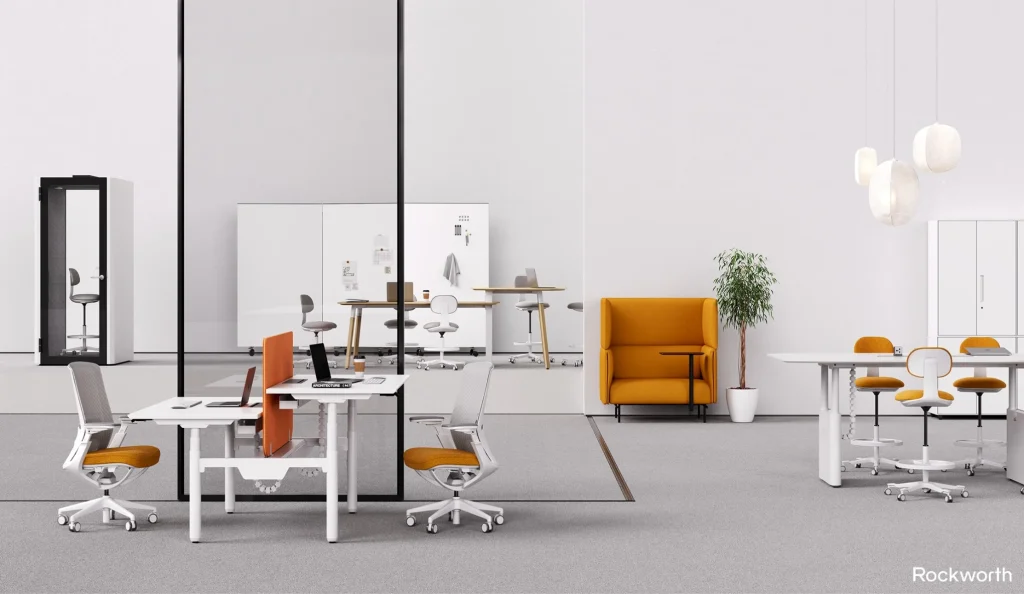
Trends suggest that there is a growing importance of ergonomic seating. Industry experts report that many organizations are willing to invest more in chairs than workstations because employees experience the impact of seating comfort every day.
In fact, buyers often prefer to physically experience ergonomic chairs before making a purchasing decision. Once employees understand the difference that proper ergonomic support can make, they are generally more willing to invest in high-quality seating solutions.
Beyond ergonomics, organizations are also paying closer attention to workplace acoustics and cognitive wellbeing. Acoustic booths, sound-absorbing materials, and focused work environments are helping employees balance collaboration with concentration.
Key Features
- Ergonomic task chairs
- Height-adjustable workstations
- Acoustic pods and focus booths
- Sound-absorbing workplace materials
- Furniture designed for posture and movement
Why It Matters?
Organizations are increasingly viewing workplace investments through the lens of employee performance. Comfort, posture, concentration, and wellbeing all have a measurable impact on productivity.
The workplace of 2026 will not simply be designed for work—it will be designed to help people perform at their best.
What Are Clients Prioritizing Most Today?
1.Flexibility
2. Employee Comfort
3. Long-Term Value
4. Sustainability
People Also Ask
- What is the future of office design?
The future of office design is centred around flexibility, employee wellbeing, sustainability, and technology integration. Workplaces are evolving into experience-driven environments that support collaboration, Hybrid work, and productivity.
- Are open-plan offices still relevant in 2026?
Open-plan offices are evolving rather than disappearing. Modern workplaces combine open collaborative areas with focus booths, phone pods, and quiet zones to support different work styles and improve employee experience.
- What is Activity-Based Working (ABW)?
Activity-Based Working (ABW) is a workplace strategy that provides different spaces for different tasks. Employees can choose from focus areas, collaboration zones, meeting rooms, and social spaces depending on the nature of their work.
- What is biophilic office design?
Biophilic office design incorporates natural elements such as plants, natural light, organic materials, and nature-inspired colours to improve employee wellbeing, reduce stress, and enhance workplace satisfaction.
- What is a smart office?
A smart office uses technology such as occupancy sensors, room-booking systems, intelligent lighting controls, and collaboration tools to improve workplace efficiency, employee comfort, and space utilization.
- How can office design improve employee productivity?
Office design can improve productivity by creating comfortable, ergonomic, and flexible environments that support focus, collaboration, wellbeing, and efficient use of space.
Frequently Asked Questions (FAQs)
- How has office design demand changed over the last few years?
Office design demand has shifted significantly towards sustainability, employee wellbeing, and workplace experience. Organizations are increasingly looking for LEED-compliant workplaces, biophilic elements, flexible layouts, and furniture solutions that support Hybrid work environments.
- Are companies investing more in office spaces or focusing on cost optimization?
Most organizations are optimizing costs rather than simply reducing spending. Businesses are becoming more selective about where they invest, prioritizing elements that directly impact employee comfort, productivity, and workplace performance.
- What do companies prioritize most when designing an office today?
Flexibility and employee comfort are among the highest priorities. While budget remains important, organizations increasingly recognize that workplace design influences productivity, employee engagement, and talent retention.
- What are the biggest challenges companies face when designing an office?
Three of the most common challenges include ensuring employee seating comfort, maximizing space utilization, and finding adaptable solutions that can accommodate future growth and changing workplace requirements.
- Why are companies investing more in ergonomic chairs than workstations?
Employees interact with their chairs throughout the workday, making seating comfort a direct contributor to wellbeing and productivity. As a result, many organizations are willing to invest more in ergonomic seating while optimizing costs in other furniture categories.
- Is modular and reconfigurable office furniture becoming more popular?
Yes. Organizations are increasingly investing in modular furniture systems because they provide greater flexibility, support changing team structures, and help businesses adapt their workplace layouts without major renovation costs.
- How important is sustainability in office design decisions?
Sustainability has become a major factor in workplace planning. Organizations are increasingly looking for environmentally responsible materials, energy-efficient solutions, and sustainable furniture options that support both ESG goals and employee wellbeing.
8.What will define a high-performing office in 2026?
A high performing office will successfully combine employee wellbeing, ergonomic design, workplace flexibility, sustainability, and seamless technology integration. The focus will be on creating environments that help people collaborate effectively while supporting productivity and long-term business performance.